Showing posts with label 1902. Show all posts

Monday, 21 February 2022

MARY MILES MINTER ,AMERICAN ACTRESS BORN 1902 APRIL 25 -1984 AUGUST 4


MARY MILES MINTER ,AMERICAN ACTRESS 

BORN 1902 APRIL 25 -1984 AUGUST 4


Mary Miles Minter (born Juliet Reilly; April 25, 1902[1][2]– August 4, 1984) was an American actress. She appeared in 53 silent films from 1912 to 1923.


In 1922, Minter was involved in a scandal surrounding the murder of director William Desmond Taylor, for whom she professed her love. Although gossip implicated her mother, former actress Charlotte Shelby, as the murderer, Minter's reputation was tarnished, and she gave up her film career in 1923.

Early life

Minter was born in Shreveport, Louisiana, the younger of two daughters born to J. Homer Reilly[3] (1877–1958)[citation needed] and Lily Pearl Miles (later known as Broadway actress Charlotte Shelby;[3] 1877–1957). Her sister was Margaret Reilly, who later became an actress using the name Margaret Shelby.


Career

Stage and film career


Minter, c. 1918

At the age of five, she accompanied her sister Margaret on an audition because no babysitter was available. She was noticed by the director and given her first part. She began her stage career and frequently was employed afterward, widely noted for both her talent and visual appeal. To avoid child labor laws while the 10-year-old was appearing in a play in Chicago in 1912, Charlotte Shelby obtained the birth certification of her older sister's deceased daughter from Louisiana, and Juliet became Mary Miles Minter.


In her screen debut, in which she was billed as Juliet Shelby, she appeared in the 1-reel short film The Nurse (1912). Her new stage name was applied, and Minter starred in the role as Viola Drayton, the fairy, in the 5-reel drama The Fairy and the Waif (1915).


Minter's career steadily grew after that. She specialized in playing demure young women. With her photogenic features, blue eyes, and blonde curls, she emulated and later rivaled Mary Pickford.


Her first movie for director William Desmond Taylor was Anne of Green Gables (1919). It was well-received, and Taylor actively promoted Minter. According to Minter, a romantic relationship developed between them. However, Minter (who had grown up fatherless) said Taylor had reservations from the outset and later curtailed the romance, citing their 30-year age difference. [4] Other people who knew Taylor and Minter said he never reciprocated her feelings.


Scandal

On February 1, 1922, Taylor was murdered in his home, a two-story bungalow apartment on Alvarado Street,[3] at the southeast corner of Alvarado and Maryland Street in the Westlake area of Los Angeles.


Minter in 1922

The ensuing scandal, following the Roscoe "Fatty" Arbuckle scandal of Labor Day weekend 1921, and Arbuckle's murder trial, was the subject of widespread media speculation and embellishment. Newspapers reported that coded love letters written by Minter had been found in his bungalow after his death (these were later shown to have been written three years earlier in 1919). Minter was at the height of her success, having starred in more than 50 films, and newspaper revelations of the 20-year-old star's association with the 49-year-old murdered director was cause for a sensational scandal.[citation needed]


There were several suspects (including her mother Charlotte Shelby) in the long investigation of Taylor's murder. In 1937, Minter publicly announced to the Los Angeles Examiner newspaper: "Now I demand that I either be prosecuted for the murder committed fifteen years ago, or exonerated completely. If the District Attorney has any evidence, he should prosecute. If not, then I should be exonerated... Shadows have been cast upon my reputation."[5] Taylor's murder was never solved.


In a 1970 interview, during which she described Taylor as her "mate," Minter recalled going to view Taylor's body immediately after the murder. In shock, she demanded to be used for a blood transfusion to revive him, not believing he was dead until she touched his body in the morgue: "That deadly cold... convinced me as nothing else could have done. No life can return to this man." She broke down and sobbed: "They crucified Jesus. Now they've crucified... They've crucified my mate."[6]


Later career and retirement

Minter made four more motion pictures for Paramount, with her last being The Trail of the Lonesome Pine (1923). When the studio did not renew her contract, she received many other offers but declined them all, saying she had never been happy as an actress.


Personal life


Miles Minter by Witzel, circa 1917

Minter was involved with James Kirkwood Sr. for a time in 1916 when she was 15 years old. Minter and Kirkwood "married" without benefit of clergy in the countryside near Santa Barbara. The relationship ended after Minter became pregnant by Kirkwood and underwent an abortion, which was paid for by her mother.[7]


In late 1922, several months after Taylor's death, Minter became involved romantically for a time with then-news correspondent of Los Angeles and movie critic Louis Sherwin, who had at one time been married to actress Maude Fealy.[8]


In 1925, Minter sued her mother for an accounting of the money Shelby had received for her during her screen career.[9] The case was settled out of court, with the settlement being signed by Minter and Shelby at the American consulate in Paris, France, on January 24, 1927.[10]


In 1934, a hearing took place in Los Angeles, in which Hilda Desey, the proprietor of a dress shop on Wilshire Blvd., claimed that Minter entered her shop and took a tweed dress valued at $55.00 by force. Minter countered in court by stating that she had helped finance Miss Desey's dress shop and that she took the dress as she was owed interest. The deputy district attorney declined to issue a complaint for either petty theft or malicious mischief, as it was decided that there was no evidence of malicious intent on the part of Minter.[11]


In 1957, Minter and real estate developer Brandon O. Hildebrandt (1898–1965) were married. They remained married until Hildebrandt's death in 1965.[12]


Later years

Minter commented she was content to live without her Hollywood career. She later reconciled with her mother and proclaimed her love for Taylor throughout her life. Minter's money had been invested in Los Angeles real estate, and she seems to have lived in relative comfort and prosperity. She later moved to a house in Santa Monica, California; her mother Charlotte Shelby died there in 1957.


In 1981, Minter was severely beaten in a burglary at her home in which more than $300,000 worth of antiques, china and jewelry were taken. A former live-in companion and three other people were charged with attempted murder and burglary.[13] The police described her as a frail, old woman, and people often were shocked to learn she had been a famous movie star.


Minter died in 1984 at age 82 from a stroke in Santa Monica.[2][14] She was cremated, and her ashes were scattered at sea. For her contribution to movies, she has a star on the Hollywood Walk of Fame at 1724 Vine Street in Hollywood.


Legacy

As is common with silent movie stars, much of Minter's work has been lost; of her 53 films, approximately a dozen are known to exist today. A print of her 1919 movie The Ghost of Rosy Taylor surfaced in New Zealand in the 1990s. Other known surviving movies include The Fairy and the Waif (1915), Youth's Endearing Charm (1916), A Dream or Two Ago (1916), The Innocence of Lizette (1916), The Eyes of Julia Deep (1918), Nurse Marjorie (1920), A Cumberland Romance (1920) and The Little Clown (1921).[15][16]


FAME, LOVE, AND MURDER: THE STORY OF ACTRESS MARY MILES MINTER

by Sara Catherine Lichon.
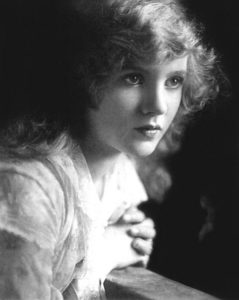
Mary Miles Minter, silent film star and suspect in her lover’s 1922 murder.

Sometimes the stories and scandals of celebrities come up when researching for the JAPP. Oftentimes, the famous are only mentioned briefly in one of Addams’ letters, and their scandals become known when we research their lives to write their biographies. One such person is the silent film actress, Mary Miles Minter. In December 1911, Ida White Parker interviewed Anna V. Morrison, a dramatic agent, who discussed Jane Addams’ opposition to a child actor exception to the 1903 Illinois Child Labor Law, one of the first strict child labor laws in the United States. Minter was only mentioned in passing, as an example of how child actors in Illinois could easily bypass the law by providing fake birth certificates or lying about their age. Little did anyone know then that Minter would later figure in a case of unrequited love and murder.

Mary Miles Minter was born in 1902 in Shreveport, Louisiana, as Juliet Reilly. Her mother, Lily Pearl Miles, was known professionally as Charlotte Shelby, an actress. Juliet’s sister, Margaret Shelby was also an actresses, and when Juliet was five she followed her sister to an audition. A director noticed her and gave her a role, marking the beginning of her acting career. When she was ten, her mother used the birth certificate of her elder sister’s deceased daughter in order to bypass the child labor laws in Chicago, and she adopted the stage name Mary Miles Minter. In 1912, Minter made her screen debut when she appeared in the short film The Nurse. Her next role was that of Viola Drayton in the 1915 feature length film The Fairy and the Waif. From there, Minter became a silent movie star.

Director William Desmond Taylor, Minter’s lover who was murdered in 1922.

In 1919, Minter was in Anne of Green Gables, directed by William Desmond Taylor. Despite a thirty year age difference, the two began a romantic relationship. However, Taylor eventually called the affair off because of their ages, and many who knew the couple said Taylor never reciprocated Minter’s feelings. Minter, however, claimed that she was the one to end the relationship, though it had been on and off for quite some time.

On February 1, 1922, everything changed for Minter when Taylor was found shot and murdered in his home. Minter and her mother became prime suspects, and Minter’s reputation was destroyed. Stories circulated of unrequited love, jealousy, and ambition; Taylor had reportedly been romantically involved with the actress Mabel Normand, and both she and Minter were reported to have visited Taylor the night of his murder.  Minter claimed she hadn’t seen Taylor since December 23rd. Charlotte Shelby’s maid reported that Shelby left the house that night with a gun. The murder was never solved, but Minter’s reputation never recovered. In an interview fifteen years later, she stated “Shadows have been cast upon my reputation. . .  My career was blasted and my private life ruined.” The scandal followed her to the point that she demanded “that I either be prosecuted or exonerated.”

After Taylor’s death, Minter appeared in four more movies, the last being The Trail of the Lonesome Pine in 1923. Though she received offers after 1923, she never accepted them, claiming she could not be happy as an actress. Despite declaring that she would always love Taylor and no other, Minter was engaged for a short period to movie critic Louis Sherwin, and in 1957 she married real estate developer Brandon O. Hildebrandt.

Listen to Minter’s 1970 interview about the murder.

Despite wanting to step out of the spotlight, Minter’s later life was anything but calm. In 1925, she sued her mother for keeping the money Minter made from movies as a child. Much later, in 1981, Minter was severely beaten when her home was robbed, and a former companion of hers and three other people were charged with the crime.

Regardless of the scandal that followed her throughout her life, Minter was loved by many for her acting. She has a star on the Hollywood Walk of Fame, and some of her movies have survived and still exist today (see Nurse Marjorie, directed by Taylor on You Tube). In 1984, Minter died, and her cremated ashes were scattered at sea.

We may never know who Taylor’s murderer was, or to what extent Minter was involved in the murder. All we can do is speculate, and remember Minter for her talent – and the fact that she bypassed Illinois’ child labor laws, much to Jane Addams’ chagrin!


மேரி மைல்ஸ் மின்டர் (பிறப்பு ஜூலியட் ரெய்லி; ஏப்ரல் 25, 1902[1][2]- ஆகஸ்ட் 4, 1984) ஒரு அமெரிக்க நடிகை. அவர் 1912 முதல் 1923 வரை 53 அமைதியான படங்களில் நடித்தார்.

சில சமயங்களில் பிரபலங்களின் கதைகள் மற்றும் அவதூறுகள் JAPP க்காக ஆராய்ச்சி செய்யும் போது வரும். பெரும்பாலும், பிரபலமானவர்கள் ஆடம்ஸின் கடிதங்களில் ஒன்றில் மட்டுமே சுருக்கமாக குறிப்பிடப்படுகிறார்கள், மேலும் அவர்களின் வாழ்க்கை வரலாற்றை எழுதுவதற்காக அவர்களின் வாழ்க்கையை ஆராயும்போது அவர்களின் ஊழல்கள் அறியப்படுகின்றன. அப்படிப்பட்டவர்களில் ஒருவர்தான் மௌன திரைப்பட நடிகையான மேரி மைல்ஸ் மின்டர். டிசம்பர் 1911 இல், ஐடா வைட் பார்க்கர், வியத்தகு முகவரான அன்னா வி. மோரிசனை நேர்காணல் செய்தார், அவர் அமெரிக்காவில் முதல் கடுமையான குழந்தை தொழிலாளர் சட்டங்களில் ஒன்றான 1903 இல்லினாய்ஸ் குழந்தைத் தொழிலாளர் சட்டத்திற்கு விதிவிலக்காக குழந்தை நடிகருக்கு ஜேன் ஆடம்ஸின் எதிர்ப்பைப் பற்றி விவாதித்தார். இல்லினாய்ஸில் உள்ள குழந்தை நடிகர்கள் போலி பிறப்புச் சான்றிதழ்களை வழங்குவதன் மூலமோ அல்லது அவர்களின் வயதைப் பற்றி பொய் சொல்வதன் மூலமோ எவ்வாறு சட்டத்தை எளிதில் புறக்கணிக்க முடியும் என்பதற்கான உதாரணம், கடந்து செல்வதில் மட்டுமே Minter குறிப்பிடப்பட்டார். மிண்டர் பின்னர் கோரப்படாத காதல் மற்றும் கொலை வழக்கில் சிக்குவார் என்று யாருக்கும் தெரியாது.


மேரி மைல்ஸ் மின்டர் 1902 இல் லூசியானாவின் ஷ்ரெவ்போர்ட்டில் ஜூலியட் ரெய்லியாகப் பிறந்தார். அவரது தாயார், லில்லி பேர்ல் மைல்ஸ், தொழில்ரீதியாக சார்லோட் ஷெல்பி, ஒரு நடிகை என்று அறியப்பட்டார். ஜூலியட்டின் சகோதரி, மார்கரெட் ஷெல்பியும் ஒரு நடிகையாக இருந்தார், மேலும் ஜூலியட்டுக்கு ஐந்து வயதாக இருந்தபோது, ​​அவர் தனது சகோதரியை ஆடிஷனுக்குப் பின்தொடர்ந்தார். ஒரு இயக்குனர் அவளைக் கவனித்து அவளுக்கு ஒரு பாத்திரத்தைக் கொடுத்தார், இது அவரது நடிப்பு வாழ்க்கையின் தொடக்கத்தைக் குறிக்கிறது. அவளுக்கு பத்து வயதாக இருந்தபோது, ​​சிகாகோவில் குழந்தைத் தொழிலாளர் சட்டங்களை மீறுவதற்காக அவரது தாயார் தனது மூத்த சகோதரியின் இறந்த மகளின் பிறப்புச் சான்றிதழைப் பயன்படுத்தினார், மேலும் அவர் மேரி மைல்ஸ் மின்டர் என்ற மேடைப் பெயரை ஏற்றுக்கொண்டார். 1912 ஆம் ஆண்டில், மிண்டர் தி நர்ஸ் என்ற குறும்படத்தில் தோன்றியதன் மூலம் திரையுலகில் அறிமுகமானார். அவரது அடுத்த பாத்திரம் 1915 ஆம் ஆண்டு திரைப்படமான தி ஃபேரி அண்ட் தி வைஃப் இல் வயோலா டிரேட்டனின் பாத்திரமாகும். அங்கிருந்து, மின்டர் ஒரு அமைதியான திரைப்பட நட்சத்திரமானார்.


இயக்குனர் வில்லியம் டெஸ்மண்ட் டெய்லர், 1922 இல் கொலை செய்யப்பட்ட மிண்டரின் காதலர்.

1919 இல், வில்லியம் டெஸ்மண்ட் டெய்லர் இயக்கிய அன்னே ஆஃப் கிரீன் கேபிள்ஸில் மின்டர் நடித்தார். முப்பது வயது வித்தியாசம் இருந்தபோதிலும், இருவரும் காதல் உறவைத் தொடங்கினர். இருப்பினும், டெய்லர் அவர்களின் வயது காரணமாக இந்த விவகாரத்தை நிறுத்தினார், மேலும் தம்பதியரை அறிந்த பலர் டெய்லர் மிண்டரின் உணர்வுகளை ஒருபோதும் பரிமாறவில்லை என்று கூறினார். இருப்பினும், மிண்டர், உறவை முடிவுக்குக் கொண்டுவருவது அவள்தான் என்று கூறினார், அது சில காலமாக இருந்தது மற்றும் முடக்கப்பட்டது.


பிப்ரவரி 1, 1922 இல், டெய்லர் அவரது வீட்டில் சுட்டுக் கொல்லப்பட்டதைக் கண்டபோது மின்டருக்கு எல்லாமே மாறியது. மின்டரும் அவரது தாயும் பிரதான சந்தேக நபர்களானார்கள், மேலும் மிண்டரின் நற்பெயர் அழிக்கப்பட்டது. கோரப்படாத காதல், பொறாமை மற்றும் லட்சியம் ஆகியவற்றால் பரப்பப்பட்ட கதைகள்; டெய்லர் நடிகை மாபெல் நார்மண்டுடன் காதல் வயப்பட்டதாகக் கூறப்படுகிறது, மேலும் அவரும் மிண்டரும் டெய்லரைக் கொன்ற இரவில் அவரைச் சந்தித்ததாகக் கூறப்படுகிறது. டிசம்பர் 23 முதல் டெய்லரைப் பார்க்கவில்லை என்று மிண்டர் கூறினார். அன்று இரவு துப்பாக்கியுடன் ஷெல்பி வீட்டை விட்டு வெளியேறியதாக சார்லட் ஷெல்பியின் பணிப்பெண் தெரிவித்தார். கொலை ஒருபோதும் தீர்க்கப்படவில்லை, ஆனால் மிண்டரின் நற்பெயர் ஒருபோதும் மீட்கப்படவில்லை. பதினைந்து ஆண்டுகளுக்குப் பிறகு ஒரு நேர்காணலில், 'என் நற்பெயரின் மீது நிழல்கள் விழுந்தன. . . எனது தொழில் வெடித்தது மற்றும் எனது தனிப்பட்ட வாழ்க்கை அழிக்கப்பட்டது. 'நான் வழக்குத் தொடரப்பட வேண்டும் அல்லது விடுவிக்கப்பட வேண்டும்' என்று அவள் கோரும் அளவிற்கு அந்த ஊழல் அவளைப் பின்தொடர்ந்தது.


டெய்லரின் மரணத்திற்குப் பிறகு, மிண்டர் மேலும் நான்கு திரைப்படங்களில் தோன்றினார், கடைசியாக 1923 இல் தி டிரெயில் ஆஃப் தி லோன்சம் பைன் நடித்தார். 1923க்குப் பிறகு அவருக்கு வாய்ப்புகள் வந்தாலும், அவர் ஒரு நடிகையாக மகிழ்ச்சியாக இருக்க முடியாது எனக் கூறி, அவற்றை அவர் ஏற்கவில்லை. டெய்லரை தான் எப்போதும் நேசிப்பேன் என்றும் வேறு யாரையும் நேசிப்பதில்லை என்று அறிவித்த போதிலும், மிண்டர் திரைப்பட விமர்சகர் லூயிஸ் ஷெர்வினுடன் சிறிது காலத்திற்கு நிச்சயதார்த்தம் செய்து கொண்டார், மேலும் 1957 இல் அவர் ரியல் எஸ்டேட் டெவலப்பர் பிராண்டன் ஓ. ஹில்டெப்ராண்டை மணந்தார்.


கொலையைப் பற்றி மிண்டரின் 1970 நேர்காணலைக் கேளுங்கள்.


கவனத்தை விட்டு வெளியேற விரும்பினாலும், மிண்டரின் பிற்கால வாழ்க்கை அமைதியாக இருந்தது. 1925 ஆம் ஆண்டில், சிறுவயதில் திரைப்படங்களில் இருந்து மிண்டர் சம்பாதித்த பணத்தை வைத்து தன் தாய் மீது வழக்கு தொடர்ந்தார். வெகு காலத்திற்குப் பிறகு, 1981 ஆம் ஆண்டில், மிண்டரின் வீடு திருடப்பட்டபோது கடுமையாகத் தாக்கப்பட்டார், மேலும் அவரது முன்னாள் துணைவியார் மற்றும் மூன்று பேர் மீது குற்றம் சுமத்தப்பட்டது.


அவரது வாழ்நாள் முழுவதும் அவளைப் பின்தொடர்ந்த அவதூறுகளைப் பொருட்படுத்தாமல், மிண்டர் அவரது நடிப்பிற்காக பலரால் விரும்பப்பட்டார். ஹாலிவுட் வாக் ஆஃப் ஃபேமில் அவருக்கு ஒரு நட்சத்திரம் உள்ளது, மேலும் அவரது சில திரைப்படங்கள் உயிர் பிழைத்திருக்கின்றன, இன்றும் இருக்கின்றன (யூ டியூப்பில் டெய்லர் இயக்கிய நர்ஸ் மார்ஜோரியைப் பார்க்கவும்). 1984 இல், மின்டர் இறந்தார், மேலும் அவரது தகனம் செய்யப்பட்ட சாம்பல் கடலில் சிதறடிக்கப்பட்டது.


டெய்லரின் கொலையாளி யார், அல்லது மிண்டர் எந்த அளவிற்கு கொலையில் ஈடுபட்டார் என்பது எங்களுக்கு ஒருபோதும் தெரியாது. நாம் செய்யக்கூடியது எல்லாம் மிண்டரின் திறமைக்காக யூகித்து, நினைவுகூர்வதுதான் - மேலும் அவர் இல்லினாய்ஸின் குழந்தைத் தொழிலாளர் சட்டங்களை மீறியதால், ஜேன் ஆடம்ஸின் வருத்தம் அதிகம்!

Filmography[edit]

The Amazing Impostor (1919)


YearTitleRoleNotes
1912The NurseThe ChildCredited as Juliet Shelby
1915The Fairy and the WaifViola Drayton, the Fairy
1915Always in the WayDorothy NorthLost film
1915Emmy of Stork's NestEmmy GarrettLost film
1915Barbara Frietchie (1915 film)Barbara, Mrs. Frietchie's granddaughterLost film
1916Rose of the AlleyNell Drogan
1916DimplesDimples
1916Lovely MaryMary LaneLost film
1916Youth's Endearing CharmMary Wade
1916Dulcie's AdventureDulcieLost film
1916FaithFaith
1916A Dream or Two AgoMillicent Hawthorne
1916The Innocence of LizetteLizette
1917The Gentle IntruderSylvia
1917EnvironmentLiz SimpkinsLost film
1917Annie-for-SpiteAnnie JohnsonLost film
1917PeriwinklePeriwinkleLost film
1917Melissa of the HillsMelissa StarkLost film
1917Somewhere in AmericaRose Dorgan
1917Charity CastleCharityLost film
1917Her Country's CallJess SlocumLost film
1917Peggy Leads the WayPeggy Manners
1917The Mate of the Sally AnnSallyLost film
1918Beauty and the RogueRoberta LeeLost film
1918Powers That PreySylvia GrantLost film
1918A Bit of JadePhyllis KingLost film
1918Social BriarsIris LeeLost film
1918The Ghost of Rosy TaylorRhoda Eldridge Sayles
1918The Eyes of Julia DeepJulia Deep
1918Rosemary Climbs the HeightsRosemary Van Voort
1918Wives and Other WivesRobin ChallonerLost film
1919The Amazing ImpostorJoan HopeLost film
1919The Intrusion of IsabelIsabel TrevorLost film
1919A Bachelor's WifeMary O'RourkeLost film
1919Yvonne from ParisYvonne HalbertLost film
1919Anne of Green GablesAnne ShirleyLost film
1920Judy of Rogue's HarborJudyLost film
1920Nurse MarjorieLady Marjorie Killonan
1920Jenny Be GoodJenny RianoLost film
1920A Cumberland RomanceEaster Hicks
1920Sweet LavenderLavenderLost film
1920Eyes of the HeartLauraLost film
1921All Soul's EveAlice Heath/Nora O'HallahanLost film
1921The Little ClownPat
1921Don't Call Me Little GirlJerryLost film
1921Moonlight and HoneysuckleJudith BaldwinLost film
1921Her Winning WayAnn AnningtonLost film
1922TillieTillie GetzLost film
1922The Heart SpecialistRosalie BeckwithLost film
1922South of SuvaPhyllis LatimerLost film
1922The Cowboy and the LadyJessica WestoonLost film
1923Drums of FateCarol DolliverLost film
1923The Trail of the Lonesome PineJune TolliverLost film

Wednesday, 23 June 2021

NORMA SHEARER ,AMERICAN ACTRESS BORN 1902 AUGUST 10 -1983 JUNE 12


NORMA SHEARER ,AMERICAN ACTRESS 

BORN 1902 AUGUST 10 -1983 JUNE 12


Edith Norma Shearer (August 10, 1902 – June 12, 1983)[2][3] was a Canadian-American actress who was active on film from 1919 through 1942.[4] Shearer often played spunky, sexually liberated ingénues.[5] She appeared in adaptations of Noël CowardEugene O'Neill, and William Shakespeare,[6] and was the first five-time Academy Award acting nominee, winning Best Actress for The Divorcee (1930).[7]

Reviewing Shearer's work, Mick LaSalle called her "the exemplar of sophisticated 1930s womanhood ... exploring love and sex with an honesty that would be considered frank by modern standards".[8] He described her as a feminist pioneer, "the first American film actress to make it chic and acceptable to be single and not a virgin on screen".[8]


Shearer was of ScottishEnglish, and Irish descent. Her childhood was spent in Montreal, where she was educated at Montreal High School for Girls and Westmount High School.[9] Her life was one of privilege, due to the success of her father's construction business. However, the marriage between her parents was unhappy. Andrew Shearer was prone to manic depression and "moved like a shadow or a ghost around the house",[10] while her mother Edith Fisher Shearer was attractive, flamboyant, and stylish. Young Norma was interested in music, as well, but after seeing a vaudeville show for her ninth birthday, she announced her intention to become an actress. Edith offered support, but as Shearer entered adolescence, she became secretly fearful that her daughter's physical flaws would jeopardize her chances. Shearer herself "had no illusions about the image I saw in the mirror".[This quote needs a citation] She acknowledged her "dumpy figure, with shoulders too broad, legs too sturdy, hands too blunt",[This quote needs a citation] and was also acutely aware of her small eyes that appeared crossed due to a cast in her right eye. By her own admission, though, she was "ferociously ambitious, even as a young girl",[This quote needs a citation] and planned to overcome her deficiencies through careful camouflage, sheer determination, and charm.[citation needed]

The childhood and adolescence that Shearer once described as "a pleasant dream" ended in 1918, when her father's company collapsed, and her older sister, Athole, suffered her first serious mental breakdown. Forced to move into a small, dreary house in a "modest" Montreal suburb, the sudden plunge into poverty only strengthened Shearer's determined attitude: "At an early age, I formed a philosophy about failure. Perhaps an endeavor, like my father's business, could fail, but that didn't mean Father had failed."[11]


Edith Shearer thought otherwise. Within weeks, she had left her husband and moved into a cheap boarding house with her two daughters. A few months later, encouraged by her brother, who believed his niece should try her luck in "the picture business",[This quote needs a citation] then operating largely on the East Coast, Edith sold her daughter's piano and bought three train tickets for New York City. Also in her pocket was a letter of introduction for Norma, acquired from a local theatre owner, to Florenz Ziegfeld, who was currently preparing a new season of his famous Ziegfeld Follies.[citation needed]

Career[edit]

Early beginnings[edit]

Portrait of Shearer by Arnold Genthe, c. 1920

In January 1920, the three Shearer women arrived in New York, each of them dressed up for the occasion. "I had my hair in little curls", Shearer remembered, "and I felt very ambitious and proud."[12] Her heart sank, however, when she saw their rented apartment: "There was one double bed, a cot with no mattress and a stove with one gas jet. The communal bathroom was at the end of a long, dimly lit hallway. Athole and I took turns sleeping with mother in the bed, but sleep was impossible anyway—the elevated trains rattled right past our window every few minutes."[This quote needs a citation]

The introduction to Ziegfeld proved equally disastrous. He turned Shearer down flat, reportedly calling her a "dog", and criticized her crossed eyes and stubby legs.[13] She continued doing the rounds with her determination undimmed: "I learned that Universal Pictures was looking for eight pretty girls to serve as extras. Athole and I showed up and found 50 girls ahead of us. An assistant casting director walked up and down looking us over. He passed up the first three and picked the fourth. The fifth and sixth were unattractive, but the seventh would do, and so on, down the line until seven had been selected—and he was still some ten feet ahead of us. I did some quick thinking. I coughed loudly, and when the man looked in the direction of the cough, I stood on my tiptoes and smiled right at him. Recognizing the awkward ruse to which I'd resorted, he laughed openly and walked over to me and said, 'You win, Sis. You're Number Eight.'"[14]

Strabismus, Norma Shearer, 1926

Other extra parts followed, including one in Way Down East, directed by D. W. Griffith. Taking advantage of a break in filming and standing shrewdly near a powerful arc light, Shearer introduced herself to Griffith and began to confide her hopes for stardom. "The Master looked down at me, studied my upturned face in the glare of the arc, and shook his eagle head. Eyes no good, he said. A cast in one and far too blue; blue eyes always looked blank in close-up. You'll never make it, he declared, and turned solemnly away."[This quote needs a citation]

Still undeterred, Shearer risked some of her savings on a consultation with Dr. William Bates, a pioneer in the treatment of strabismus.[15][16][17] He wrote out a series of muscle-strengthening exercises that after many years of daily practice would successfully conceal Shearer's cast for long periods of time on the screen. She spent hours in front of the mirror, exercising her eyes and striking poses that concealed or improved the physical flaws noted by Ziegfeld or Griffith. At night, she sat in the galleries of Broadway theatres, studying the entrances of Ina ClaireLynn Fontanne, and Katharine Cornell.

In desperate need of money, Shearer resorted to some modeling work, which proved successful. On her modeling career, she commented: "I could smile at a cake of laundry soap as if it were dinner at the Ritz. I posed with a strand of imitation pearls. I posed in dust-cap and house dress with a famous mop, for dental paste and for soft drink, holding my mouth in a whistling pose until it all but froze that way." She became the new model for Kelly-Springfield Tires, was bestowed with the title "Miss Lotta Miles" and depicted seated inside the rim of a tire, smiling down at traffic from a large floodlit billboard.[18]

Finally, a year after her arrival in New York, she received a break in film: fourth billing in a B-movie titled The Stealers (1921). In January 1923, Shearer received an offer from Louis B. Mayer Pictures, a studio in Northeast Los Angeles that was run by a small-time producer, Louis B. MayerIrving Thalberg had moved to Louis B. Mayer Pictures as vice president on February 15, 1923, but had already sent a telegram to Shearer's agent, inviting her to come to the studio. After three years of hardship, she found herself signing a contract. It called for $250 a week for six months, with options for renewal and a test for a leading role in a major film called The Wanters.


Hollywood[edit]

Shearer left New York around February 17.[19] Accompanied by her mother, she felt "dangerously sure of herself"[20] as her train neared Los Angeles. When she was not welcomed, even an hour after her arrival, she realized that there would be no star treatment from her new studio. Dispirited, she allowed Edith to hail a taxi.

The next morning, Shearer went to the Mayer Company on Mission Road to meet with Thalberg. Shearer was momentarily thrown by their confused introduction, but soon found herself "impressed by his air of dispassionate strength, his calm self-possession and the almost black, impenetrable eyes set in a pale olive face".[21]

Shearer in an early MGM publicity photo

Shearer was less impressed, however, with her first screen test: "The custom then was to use flat lighting, to throw a great deal of light from all directions, in order to kill all shadows that might be caused by wrinkles or blemishes. But the strong lights placed on either side of my face made my blue eyes look almost white, and by nearly eliminating my nose, made me seem cross-eyed. The result was hideous."[21]

The day after the test had been screened for Mayer and Thalberg, cameraman Ernest Palmer found Shearer frantic and trembling in the hallway. Speaking with her, he was struck by her "fierce, almost raging disappointment",[This quote needs a citation] and after viewing the test himself, agreed that she had been "poorly handled". Under Palmer's own supervision, a second test was made and judged a success by the studio brass. The lead in The Wanters seemed hers, until the film's director objected, finding her "unphotogenic". Again, Shearer was to be disappointed, relegated to a minor role.

Shearer in Slave to Fashion (1925)

She accepted her next role in Pleasure Mad, knowing "it was well understood that if I didn't deliver in this picture, I was through". After only a few days of shooting, things were not looking good. Shearer was struggling. Finally, the film's director complained to Mayer that he could get nothing out of the young actress, and when summoned to Mayer's office, she fully expected the axe to fall:

"But to my surprise, Mr. Mayer's manner was paternal. 'There seems to be a problem,' he said, 'tell me about it.' I told him that the director had shouted at me and frightened me. Nobody had warned me that Mayer was a better actor than any of us, and I was unprepared for what happened next. He staged an alarming outburst, screaming at me, calling me a fool and a coward, accusing me of throwing away my career because I couldn't get on with a director. It worked. I became tearful, but obstinate. 'I'll show you!' I said to him. 'You'll see!' Delighted, Mayer resumed the paternal act. 'That's what I wanted to hear', he said, smiling."[22]

Returning to the set, Shearer plunged into an emotional scene. "I took that scene lock, stock, and barrel, fur, fins and feathers",[This quote needs a citation] she remembered, earning her the respect of her director and her studio. As a reward, Thalberg cast her in six films in eight months.

The apprenticeship served Shearer well. On April 26, 1924, Louis B. Mayer Pictures was merged with Metro Pictures and the Samuel Goldwyn Company to form Metro-Goldwyn-Mayer. Shearer was cast with Lon Chaney and John Gilbert in the studio's first official production, He Who Gets Slapped. The film was a conspicuous success and contributed to the meteoric rise of the new company, and to Shearer's visibility. By late 1925, she was carrying her own films, and was one of MGM's biggest attractions, a bona fide star. She signed a new contract; it paid $1,000 a week and would rise to $5,000 over the next five years. She bought a house for herself and Edith at 2004 Vine Street, which was located under the Hollywoodland sign.

Irving and Norma[edit]

Shearer and Irving Thalberg outside the White House, 1929

Having become a star, Shearer's new challenge was to remain one. Many other talented actresses were at the studio, and she realized she would have to fight hard to stay ahead of the pack. Seeing that sensational newcomer Greta Garbo was one of a kind, she went to Thalberg and "demanded recognition as one of another kind". It was just one of the many visits she paid to his office, always to plead for better material, better parts. Thalberg would listen patiently, then invariably advise her to keep toeing the line, that MGM knew best, and that the movies she complained about had made her a popular actress. Occasionally, Shearer would burst into tears, but this seemed to make "no more impression than rain on a raincoat".[23]

Privately, Thalberg was very impressed by Shearer. In a story conference, when her name was suggested to him for the part of a girl threatened with rape, Thalberg shook his head, and, with a wry smile, he said, "She looks too well able to take care of herself."[24]

Shearer, for her part, found herself increasingly attracted to her boss. "Something was understood between us, an indefinite feeling that neither of us could analyze."[This quote needs a citation] Thalberg's appeal was not primarily sexual. What attracted Shearer was his commanding presence and steely grace, the impression he gave that wherever he sat was always the head of the table. In spite of his youth – he was only 26 – Thalberg became a father figure to the 23-year-old actress.

At the end of a working day in July 1925, Shearer received a phone call from Thalberg's secretary, asking if she would like to accompany Thalberg to the premiere of Chaplin's The Gold Rush. That night, they made their first appearance as a couple. A few weeks later, Shearer went to Montreal to visit her father. While there, she had a reunion with an old school friend, who remembered: "At the end of lunch, over coffee, Norma leant in across the table. 'I'm madly in love', she whispered. 'Who with?' I asked. 'With Irving Thalberg', she replied, smiling. I asked how Thalberg felt. 'I hope to marry him', Norma said, and then, with the flash of the assurance I remembered so well, 'I believe I will.'"[25]

Over the next two years, both Shearer and Irving saw other people. Louise Brooks remembered: "I held a dinner party sometime in 1926. All the place cards at the dinner table were books. In front of Thalberg's place was Dreiser's Genius, and in front of Norma's place, I put The Difficulty of Getting Married. It was so funny because Irving walked right in and saw Genius, and sat right down, but Norma kept walking around. She wouldn't sit down in front of The Difficulty of Getting Married – no way!"[26]

By 1927, Shearer had made a total of 13 silent films for MGM. Each had been produced for under $200,000, and had, without fail, been a substantial box-office hit, often making a $200,000+ profit for the studio.[27] She was rewarded for this consistent success by being cast in Ernst Lubitsch's The Student Prince in Old Heidelberg, her first prestige production, with a budget over $1,000,000. While she was finishing The Student Prince, Shearer received a call summoning her to Thalberg's office. She entered to find Thalberg sitting at his desk before a tray of diamond engagement rings. He granted her the option to choose her own ring; she picked out the biggest. After weeks of rumors, provoked by wearing the ring, it was announced in August 1927 that they were to wed.[28] On September 29, 1927, they were married in the Hollywood wedding of the year. Shearer had two children with Thalberg – Irving Thalberg, Jr. (1930–1987), and Katherine (1935–2006). Before they were married, Shearer converted to Judaism so she could marry Thalberg.[29]


Early talkies[edit]

One week after the marriage, The Jazz Singer was released. The first feature-length motion picture with sound, it effectively changed the cinematic landscape overnight and signaled the end of the silent motion-picture era. It also spelled the end of many silent careers, and Shearer was determined hers would not be one of them. Her brother, Douglas Shearer, was instrumental in the development of sound at MGM, and every care was taken to prepare her for the microphone.

Her first talkie, The Trial of Mary Dugan (1929), turned out to be a tremendous success. Shearer's "medium-pitched, fluent, flexible Canadian accent, not quite American, but not at all foreign",[30] was critically applauded, and thereafter widely imitated by other actresses, nervous about succeeding in talkies. Despite the popularity of her subsequent early talking films, The Last of Mrs. Cheyney and Their Own Desire (both 1929), Shearer feared the public would soon tire of her "good girl" image, and took the advice of friend and co-star Ramón Novarro to visit an unknown photographer named George Hurrell.[31] There, she took a series of sensual portraits that convinced her husband that she could play the lead in MGM's racy new film, The Divorcee (1930).

Pre-Code[edit]

Shearer won an Academy Award for Best Actress for her role in The Divorcee,[32] and a series of highly successful pre-Code films followed, including Let Us Be Gay (1930), Strangers May Kiss (1931), A Free Soul (1931) with Leslie Howard and Clark GablePrivate Lives (1931), and Strange Interlude (1932). All of these were box-office hits, placing Shearer in competition with Joan CrawfordGreta Garbo, and Jean Harlow as MGM's top actress through the remainder of the decade.[33]

Shearer's marriage to Thalberg gave her a degree of power in Hollywood that was resented by rivals such as Crawford, who complained that Shearer would always be offered the best roles and best conditions: "How can I compete with Norma when she's sleeping with the boss?"[34]

Shearer's pre-Code films included period dramas and theatrical adaptations. Smilin' Through (1932), which co-starred Fredric March, was one of the most successful films of the period.[35] An adaptation of Eugene O'Neill's four-hour experimental Strange Interlude (1932), which also starred Clark Gable, was a disappointing adaptation of O'Neill, but a showcase for Shearer, thus a major hit.[36]

The First Lady of MGM[edit]

Fredric March and Shearer in The Barretts of Wimpole Street (1934)

The enforcement of the Production Code in 1934 forced Shearer to drop her celebrated "free soul" image, and move exclusively into period dramas and "prestige" pictures. Of these, The Barretts of Wimpole Street (1934) proved her most successful at the box office, making a profit of $668,000, in part because the film contained elements that slipped by the newly instituted Production Code. In that film, she played a role made famous by Katharine Cornell. Shearer also took on another play popularized by Cornell in Romeo and Juliet (1936) (her first film of the 1930s to lose money), and Marie Antoinette (1938) (a budget of almost $2,500,000 was too great for the studio to expect a profit), though their elaborate sets and costumes helped make the films immensely popular with audiences.[37]

Shearer was nominated for an Academy Award for Best Actress on six occasions, winning only for The Divorcee in 1930. She was nominated the same year for Their Own Desire, for A Free Soul in 1931, The Barretts of Wimpole Street in 1934, Romeo and Juliet in 1936, and Marie Antoinette in 1938. Marion Davies later recalled that Shearer came to a party at San Simeon in her Marie Antoinette costume; Davies said she was not about to remove the door so Shearer could enter, so Norma made her grand entrance through wider doors leading from another room. Four chairs were arranged so she could sit at the table in her voluminous skirts.

George Cukor, who directed Shearer in Romeo and Juliet, offered this character sketch of the actress:

“I found that Norma Shearer, when I made Romeo and Juliet, is a nervous, highly self-critical woman who has schooled herself to give an impression of self-confidence. If one had accepted that impression, one would have gone far astray in working with her. She needed sympathy and reassurance. Another way in which Miss Shearer might mislead a—I am sure she continually misleads herself—is in the matter of physical resources and sheer stamina. She becomes so engrossed in her work, so keyed up with a kind of taut, nervous energy, that she is apt to overtax her strength. She will play a long, exhausting scene over and over again without appearing to lose an atom of her freshness and verve. When it is over she will tell you she feels fine—and believe it. Then she will go to her dressing room and collapse. If one worked her as hard as she seems to want to work, she would be worn out before the film was half finished. With her, the director has to reverse the normal process of inspiring his star to greater efforts. He has to persuade her to spare herself. The greatest joy of working with Miss Shearer comes from her complete lack of vanity. Far from bridling at minor criticisms as many actresses do, she will criticize herself with a penetrating, almost unfeminine, impersonal judgment. When she sees the unedited versions of the previous days footage [“rushes”] she seems to cease to be an actress and to look at her own work on the screen with the shrewd and critical mind of a producer.”[38]

Shearer in Marie Antoinette (1938)

In 1939, she attempted an unusual role in the dark comedy Idiot's Delight, adapted from the 1936 Robert E. Sherwood play. It was the last of Shearer's three films with Clark Gable, after A Free Soul (1931) and Strange Interlude (1932). The Women (1939) followed, with an entirely female cast of more than 130 speaking roles.

Shearer was also one of the many actresses considered for the role of Scarlett O'Hara in Gone With The Wind (1939). However, she expressed no interest, joking, "Scarlett is a thankless role. The one I'd really like to play is Rhett!"[39]

Critics praised the suspenseful atmosphere in her next film, Escape (1940), where she played the lover of a Nazi general who helps an American free his mother from a concentration camp. With increasing interest in the war in Europe, the film performed well at the box office, but Shearer passed up roles in highly successful films Now, Voyager and Mrs. Miniver, to star in We Were Dancing and Her Cardboard Lover (1942), which both failed at the box office. In 1942, Shearer unofficially retired from acting.

Retirement[edit]

Lionel Barrymore's 61st birthday in 1939, standing: Mickey RooneyRobert MontgomeryClark GableLouis B. MayerWilliam PowellRobert Taylor, seated: Norma Shearer, Lionel Barrymore, and Rosalind Russell

After Thalberg's unexpected death on September 14, 1936, Shearer retained a lawyer to ensure that Thalberg's percentages of films on which he had worked were still paid to his estate, which was contested by MGM. When she took the story to gossip columnist Louella Parsons, the studio was forced to give in and granted all the profits from MGM movies made and released from 1924 to 1938, meaning the estate eventually received over $1.5 million in percentage payments. Nevertheless, Shearer's contract was renewed for six films at $150,000 each.[40] During this time, she embarked on a brief romance with the younger actor James Stewart,[41] and then with the married actor George Raft.[42] Raft (who had separated from his wife years earlier, soon after they married) stated publicly that he wanted to marry Shearer. However, his wife's refusal to allow a divorce and the disapproval of MGM studio head Louis B. Mayer caused Shearer to end the affair.[43][44]

Following her retirement in 1942, she married Martin Arrougé (March 23, 1914 – August 8, 1999), a former ski instructor 11 years her junior.[45] Despite often attending public events in her later life, Shearer gradually withdrew from the Hollywood social scene. In 1960, her secretary stated: "Miss Shearer does not want any publicity. She doesn't talk to anyone. But I can tell you that she has refused many requests to appear in motion pictures and TV shows."[46] Arrougé and Shearer remained married until her death.

Death[edit]

Shearer's crypt in the Great Mausoleum, Forest Lawn Glendale

On June 12, 1983, Shearer died of bronchial pneumonia at the Motion Picture Country Home in Woodland Hills, California, where she had been living since 1980.[47]

She is entombed in the Great Mausoleum at Forest Lawn Memorial Park in Glendale, California, in a crypt marked Norma Arrouge, along with her first husband, Irving Thalberg.

Legacy[edit]

Shearer's fame declined after her retirement in 1942.[48] She was rediscovered in the late 1950s, when her films were sold to television, and in the 1970s, when her films enjoyed theatrical revivals. By the time of her death in 1983, she was best known for her "noble" roles in Marie Antoinette and The Women.

A Shearer revival began in 1988, when Turner Network Television began broadcasting the entire Metro-Goldwyn-Mayer film library. In 1994, Turner Classic Movies began showcasing her films, most of which had not been seen since the reconstitution of the Production Code in 1934. Shearer's work was seen anew, and the critical focus shifted from her "noble" roles to her pre-Code roles.

Even for a pampered star, her output in the sound era is strikingly meager. And yet this was part of her undeniable aura – that she did not make movies lightly and frivolously, but with great care, sincerity and conviction.

Andrew Sarris, from "You Ain't Heard Nothin' Yet": The American Talking Film History & Memory, 1927–1949.[49]

Shearer's work gained more attention in the 1990s through the publication of a series of books. The first was a biography by Gavin Lambert.[50] Next came Complicated Women: Sex and Power in Pre-Code Hollywood by Mick LaSalle, film critic at the San Francisco Chronicle.[51] Mark A. Vieira published three books on subjects closely related to Shearer: a biography of her husband, producer Irving Thalberg;[52] and two biographies of photographer George Hurrell.[53][54] Shearer was noted not only for the control she exercised over her work, but also for her patronage of Hurrell[55] and Adrian,[56] and for discovering actress Janet Leigh[57] and actor-producer Robert Evans.[58]

For her contribution to the motion-picture industry, Shearer has a star on the Hollywood Walk of Fame, at 6636 Hollywood Boulevard.[59][60] On June 30, 2008, Canada Post issued a postage stamp in its "Canadians in Hollywood" series to honour Norma Shearer, along with others for Raymond BurrMarie Dressler, and Chief Dan George.[61]

Shearer and Thalberg are reportedly the models for Stella and Miles, the hosts of the Hollywood party in the short story "Crazy Sunday" (1932) by F. Scott Fitzgerald.[62]

Most of Shearer's MGM films are broadcast on Turner Classic Movies, and many of them are also available on DVD from Warner Home Video. In 2008, she was inducted into Canada's Walk of Fame. In 2015, a number of Shearer films became available in high-definition format, authored by Warner Home Video, in most cases, from the nitrate camera negatives: A Free SoulRomeo and JulietMarie Antoinette, and The Women.[63]

Shearer is portrayed in director David Fincher’s film Mank by actress Jessie Cohen.