IRENA SENDLER POLAND ACTIVISTS SAVED 2500 CHILDRENS FROM DEATH CAMP
DURING WORLD WAR II
Irena Sendler
(Poland)
Irena Sendler

Irena Sendler meeting with Polish youth movement members, Warsaw, 1990s
Irena Sendler's daughter and granddaughter next to the tree planted in her honor, Yad Vashem, 2010
The tree planted in honor of Irena Sendler. Yad Vashem, 2012
When World War II broke out, Irena Sendler was a 29-year-old social worker, employed by the Welfare Department of the Warsaw municipality. After the German occupation, the department continued to take care of the great number of poor and dispossessed people in the city. Irena Sendler took


When the Council for Aid to Jews (Zegota) was established, Sendler became one of its main activists. The Council was created in fall 1942, after 280,000 Jews were deported from Warsaw to Treblinka. When it began to function towards the end of the year, most of the Jews of Warsaw had been killed. But it played a crucial role in the rescue of a large number who had survived the massive deportations. The organization took care of thousands of Jews who were trying to survive in hiding, seeking hiding places, and paying for the upkeep and medical care.

In September 1943, four months after the Warsaw ghetto was completely destroyed, Sendler was appointed director of Zegota’s Department for the Care of Jewish Children. Sendler, whose underground name was Jolanta, exploited her contacts with orphanages and institutes for abandoned children, to send Jewish children there. Many of the children were sent to the Rodzina Marii (Family of Mary) Orphanage in Warsaw, and to religious institutions run by nuns in nearby Chotomów, and in Turkowice, near Lublin. The exact number of children saved by Sendler and her partners is unknown.

On 20 October 1943, Sendler was arrested. She managed to stash away incriminating evidence such as the coded addresses of children in the care of Zegota and large sums of money to pay to those who helped Jews. She was sentenced to death and sent to the infamous Pawiak prison, but underground activists managed to bribe officials to release her. Her close encounter with death did not deter her from continuing her activity. After her release in February 1944, even though she knew that the authorities were keeping an eye on her, Sendler continued her underground activities. Because of the danger she had to go into hiding. The necessities of her clandestine life prevented her from attending her mother's funeral.

On October 19, 1965, Yad Vashem recognized Irena Sendler as Righteous Among the Nations. The tree planted in her honor stands at the entrance to the Avenue of the Righteous Among the Nations.
Irena Sendler: An Angel in Disguise
by Gabriella Sison from San Diego, California in United States
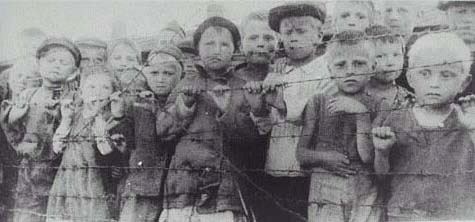 Children during the Holocaustjewishmag.comImagine being a small Jewish child during the Holocaust, unsure what the next hour held. Fearing of the thought that tomorrow will never come. Hope seems grim until, Irena Sendler rescues children from this situation. Irena Sendler was a Polish social worker who risked her life because she saved more than 2000 children during the time of World War II. She was the head of the children's section of the council for aid to Jews. This opportunity made her know the terrible conditions inside the ghetto and she tried to help the people who suffered there and provided them with their needs. A hero must possess dauntlessness and selflessness. He/She is someone who walks voluntarily into the unknown and always prioritizes other people's needs and does not ask for anything in return. Irena Sendler is considered a hero because of her compassion for other people. She put her life in danger to help those children get away from the horrors of the Holocaust. This courageous act of hers restored faith in humanity. It showed that there was still kindness in society's atrocious ways.
Sendler has made a huge mark in history when she exhibited heroism by saving those children from the Holocaust. Instead of just sitting back, she stepped right in to helping those children who were on the verge of dying. " Irena Sendler smuggled them out of the Warsaw ghetto and gave them false identities." (Daily Mail ). Irena made over 3,000 false documents that gave Jewish families new identities, which also stated that they were Gentiles. She risked her life by infiltrating the camp. She smuggled the children out from the ghetto because German authorities began mass deportations wherein Jews would be used as slaves in concentration camps. Sendler suffered great pain when she was captured. "Sendler refused divulgin any information and the Nazis never succeeded in abolishing their organization." (PR Newswire). Irena Sendler joined a Polish resistance movement called "Zegota". Unfortunately, she was arrested and betrayed by Gestapo on October 1943. Despite having been brutally tortured, she never said anything to the Nazis. Because of Sendler's bravery and heroic act, not only did she save the children from the gates of hell, that is the Holocaust; She was able to give them back the right to live in full color.
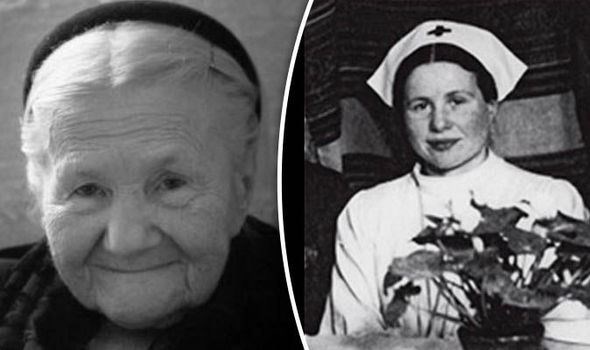 Irena Sendlerexpress.co.ukSendler was a noble hero by making sure the children she was rescuing had a future ahead of them. She put the children's lives first than her own."Her first act of defiance involved helping Jews and opponents of the Nazi Regime flee to safety." (Newsmakers). Sendler brought in food and medical supplies for the Jews. Her municipal-government pass gave her access to go through heavily armed checkpoints. Irena wanted the children to have a normal life, so she kept information about them and hid it until the war was over. "If you see someone drowning, you must jump in to save them whether you can swim or not." (lowellmilkcenter.org). This was spoken by her father to her when she was only 7 years old. This shows that even when Irena was just a child, she was taught of having compassion for other people. Irena wanted the children to live a protected and ordinary life because during those times if a Nazi found out that they were a Jew they would be shot on the spot or they would be sent to concentration camps, either of which will get them killed. Despite the difficult situation their country was in, Irena still wanted to evacuate those children from the Holocaust, no matter what the cost.
Her boldness to unchain the children from the Holocaust shows her empathy for them. This deed showed that the world can still be a better place, if there is love, kindness, and humility. According to Mahatma Gandhi, " Bravery is not a quality of the body. It is of the soul." The bravery and kindness of Irena Sendler in that devastating situation gave people, specially Jewish children, the hope to get a glimpse of a brighter tomorrow. She was a selfless person who put herself in other people's shoes to see where they were coming from. Irena entered into a situation that was life-threatening yet she was still committed to helping the Jews.
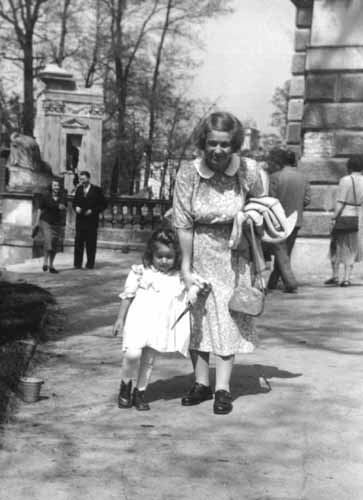 The savior of Warsawirenasendler.org We think of Irena Sendler like we think of someone we owe our life to. Her act of courageousness served as a beacon of light to the world, and it brought hope in restoring the benevolence in mankind. As Irena Sendler once said, "People can only be divided into good or bad; Their race, religion, nationality don't matter."
Works Cited
"Irena Sendler." Newsmakers, vol. 2, Gale, 2009. Biography In Context, https://link.galegroup.com/apps/doc/K1618004894/BIC?u=powa9245&sid=BIC&xid=10e a57c4. Accessed 27 Mar. 2018.
“Meet Unsung Hero Irena Sendler.” Lowell Milken Center for Unsung Heroes, 11 June 2014, lowellmilkencenter.org/irena-sendler/.
"PBS Premieres Unknown WWII Story of Polish Catholic Women Who Risked Their Lives to Save Thousands of Jewish Children." PR Newswire, 28 Apr. 2011. Biography In Context, https://link.galegroup.com/apps/doc/A255008022/BIC?u=powa9245&sid=BIC&xid=55e8 b71a. Accessed 27 Mar. 2018.
"Saviour of 2,500 children dies at 98." Daily Mail [London, England], 13 May 2008, p. 37. Biography In Context, https://link.galegroup.com/apps/doc/A178961887/BIC?u=powa9245&sid=BIC&xid=04a7 749a. Accessed 27 Mar. 2018.
The Long Path to Irena Sendler - Mother of the Holocaust Children [1]
Irena Sendler in her room in a Catholic Convent in Warsaw
“All real life is encounter.” This saying by Martin Buber is not only a challenge to us as social workers. Yesterday afternoon, while meeting with Irena Sendler, this remarkable 95 year old woman in her small but cozy and comfortable room in the frost-bitten capital of Poland, I understood Buber’s words more than ever before. But let me go back a little.
During one of the planning meetings for the upcoming 50th Jubilee and the 18th World Congress of IFSW 2006 in Munich, Germany, we were discussing possible highlights for this big event. We were also discussing outstanding personalities, professional models in the development of social work. This was the first time, that our Secretary General, Tom Johannesen, mentioned Irena Sendler and the story of the „Schindler that nobody knew” and that had surfaced in Kansas/USA. I had not heard of her and I have to admit that I was a bit sceptical - not about Irena Sendler herself and the courageous acts that distinguish her and others from mainstream followers of criminal regimes in trying times. But I had lived in the Midwest for several years and I could hardly believe that teenagers and their teacher in rural Kansas would bring such overwhelming publicity to one of the most remarkable – but almost repressed and forgotten! – rescue operations during the Holocaust, saving 2,500 children from the heavily guarded Jewish Ghetto in Warsaw, Poland.
With great interest, I read fascinating reports in the internet, and I suggest to all of my colleagues to read them carefully and be prepared for further documentation. And as it turned out, I was not the only sceptical one in the process of this overdue discovery:
„…In the fall of 1999, Mr. Conard encouraged four students to work on a year long National History Day project which would among other things; extend the boundaries of the classroom to families in the community, contribute to history learning, teach respect and tolerance, and meet our classroom motto, ‘He who changes one person, changes the world entire.’
Three ninth grade girls, Megan Stuart, Elizabeth Chambers, and Jessica Shelton, and an eleventh grade girl, Sabrina Coons, accepted the challenge and dedicated to enter their project in the National History Day program. Mr. Conard showed them a short clipping from a March 1994 issue of News and World Report, which said,’Irena Sendler saved 2,500 children from the Warsaw Ghetto in 1942-43’. He told the girls the article might be a typographical error, since he had not heard of this woman or story…” (Internet: http://www.irenasendler.org: The Project – See also: www.dzieciholocaustu.org: Concerning Irena Sendlerowa).
So I contacted one of my former professors at Kansas University who himself had been a child in the Warsaw Ghetto and who had earlier told me his own story of suffering and surviving not only the Warsaw Ghetto, but Majdanek, Budzyn, Auschwitz and the Death Marches at the end of WW II (Wieler, Zeller 1995: Emigrierte Sozialarbeit). I asked him what he knew about this new discovery. His prompt answer:
“Dear Joachim, it was good to hear from you.
Thank you for your interest in the Irena Sendler saga. The best way to find out all about her work is: 1. Check out the internet… 2. go to Google and enter: ‘Life In a Jar’. If you need any further help e-mail me or contact Norm Conard and the students.
I am delighted that IFSW is considering honoring her and presenting her work at next year’s meeting in Muenchen. I support this wholeheartedly. I have seen the “Life in a Jar” presentation and was most impressed with it, even though it’s quite simply performed. But it had tremendous impact. The audience loved it. It is hard to believe that it took 60 years for her story to come to the world’s attention. It is even harder to believe that it took a group of Christian Junior High School students in a rural area of Kansas (with virtually no Jewish population) to discover this. I was in the Warsaw Ghetto for six months prior to its total destruction and I never heard about Irena Sendler – the fact is that I never heard about her organization – Zegota. ... – Warm regards, Lou”.
This brought me into contact with Norm Conard and the project in Kansas, with the Association of ‘The Children of the Holocaust” in Poland, the Polish Association of Social Workers and with the Maximilian Kolbe Foundation in Freiburg, Germany. I found out that Irena Sendler has been bestowed with the highest honor in Poland, the Order of the White Eagle and that she is an honorary citizen of Israeland that she had received other honors. A Polish biography has been written about Irena Sendler recently (Anna Mieszkowska: Matka Dzieci Holocaustu – Historia Ireny Sendlerowej, Muza Warszawa, 2004). English and German versions will follow very soon. I will not write too much in the context of this first rather short visit. But before her detailed biography appears, I want to recite a few facts from the mentioned website, not necessarily in the same order:
Irena was born on February 15, 1910, and grew up in the town of Otwock in Poland. Her grandfather led a rebellion against the Czars. Her father was a doctor…and died in the typhus epidemic of 1917 while caring for poor Jewish people in Otwock. Irena was an only child. She had a son and a daughter. Irena Sendlerowa is a Polish Catholic woman who rescued 2,500 Jewish children in Poland during World War II. She talked Jewish parents and grandparents out of their children, rightly saying that all were going to die in the Ghetto or in death camps, taking the children past the Nazi guards …and then adopting them into the homes of Polish families or hiding them in convents and orphanages. She made lists of the children’s real names and put the lists in jars, then buried the jars in the garden, so that someday she could dig up the jars and find the children to tell them about their true identity. As early as 1939, when the Germans invaded Warsaw, Irena began helping Jews by offering them food and shelter. When the Warsaw Ghetto was erected in 1940, Irena could no longer help isolated Jews. The Ghetto enclosed 16 square blocks of the city and 450,000 Jewish people were forced into this area. Irena used her papers as a Polish social worker and papers of the workers of the Contagious Disease Department (as part of the underground Zegota) to enter the Warsaw Ghetto. To show her solidarity with the Polish people, she put on the mandatory Star of David armband on her right arm when entering the Ghetto. She was not only very active in saving Jewish children but also in resistance against the Germans.
Irena first rescued the orphan children from inside the Ghetto. She used the old courthouse at the edge of the Warsaw Ghetto (still standing) as one of the main routes of smuggling children out…Irena and the ten who went with her into the Ghetto, used many, many methods to smuggle children out. There were five main means of escape: 1- using an ambulance a child could be taken out hidden under a stretcher. 2- escape through the courthouse. 3- a child could be taken out using the sewer pipes or other secret underground passages. 4 - a trolley could carry out children hiding in a sack, in a trunk, a suitcase or something similar. 5- if a child could pretend to be sick or was actually ill, it could be legally removed using the ambulance.
Irena (code name Jolanta) was arrested on October 20, 1943 …and placed in the notorious Pawiak prison, were she was constantly questioned and tortured. During the questioning she had her legs and feet broken. She received a death sentence. She was to be shot. Unknown to her, Zegota had bribed the German executioner who helped her escape.
During the remaining years of the war, she lived hidden, just like the children she rescued. Irena was the only one who knew where the children were to be found. When the war was finally over, she dug up the bottles and began the job of finding the children and trying to find a living parent. Almost all the parents of the children Irena saved, died at Treblinka death camp ( www.irenasendler.org ).
We know now that the end of the war was not the end of the ordeal. During the struggles between the Polish government in exile and at home on one hand and the communist regime throughout Europe on the other, Irena Sendler was again persecuted for having cooperated with Zegota and the Polish government in exile. She was again sentenced to death but saved by a Jewish woman. Her life and her courageous deeds had to be hidden or at least kept at very low profile until the threat of serious repercussion finally diminished during the past few years.
After establishing contacts and finding out some of the above facts, IFSW gave me the „green light” to travel to Poland for a visit with Irena Sendler. My mission was to find out if she would like to be honored as a very special social worker of the International Federation of Social Workers. The official announcement and celebration has tentatively been set for this summer in Munich. Finally, after negotiations concerning time, locality, health and translation etc., I took the train from Weimar via Berlin to Warsaw during one of the coldest nights this winter. In contrast, the visit with Irena Sendler was one of the warmest and most pleasant personal as well as professional encounters I have ever experienced.
A co-worker of the Association “The Children of the Holocaust” in Poland, Mrs. Ewa Chalasinska, offered to translate for us and took me to small home for the elderly which is part of a Catholic Convent near the Old Town of Warsaw. It is very quiet there and a medical center as part of the convent is very convenient in terms of health care.
Mrs. Sendler met with us when others take their afternoon nap. She greeted us in her small but very comfortable room and a young woman who takes care of her much of the time stayed with us and participated in the interaction. Mrs. Sendler sat in an armchair next to the window with a view of a garden and part of the convent. In spite of her advanced age and her position tucked in her chair, she appeared to me to be very lively and agile, with an extremely friendly and open face – and particularly sparkling eyes! Her hair is rather short and very light. A black head band, fitting with her black dress, made her look elegant and rather youthful. When she spoke in a firm steady voice, she always paused often so that everything could be fully and clearly translated. She was prepared for our visit, she was very present and after the usual introductions and warming up, she asked rather direct questions. I will highlight some of them:
„To be sure”, Mrs. Sendler began our exchange regarding our central theme, „I am the only person still alive of that rescuing group but I want everyone to know that, while I was coordinating our efforts, we were about twenty to twenty five people. I did not do it alone.”
She wanted to know: Why do we (the International Federation of Social Workers) want her as an honorary social worker or member? My answer can be taken from some of the above comments: We would like not only for her to be remembered for what she did but we also would like to have her as a sort of professional role model. As advocates for our clients who are in difficult situations we need to support them and we may have to take sides, and that will sometimes take us to our limits. „Your example, Mrs. Sendler, will hopefully help us not only to make the wisest and most life-saving decisions but to stand the test when external pressure comes on. You have demonstrated that it can be done under very extreme pressure. You have set a most admirable example for us.”
„So, what do you and the international organisation want me to do concretely and in the future?” My answer: „I think that you have done such important deeds in the past and in your long life that we do not want to burden you with additional tasks and chores, so to speak. But if you would join us with your great example in our daily efforts, that will help us to make wise decisions and be congruent with our social work values.”
„Yes, but tell me something about your values and the work of IFSW.” I could not possibly rattle off everything that is summed up in our official definition of social work, the ethical paper and the various policy papers etc. I did not know how much she knew about our organization. So I handed her some information about IFSW, the upcoming congress and began to give her some general information from the website of IFSW:
“The International Federation of Social Workers (IFSW) is a global organisation striving for social justice, human rights and social development through the development of social work, best practices and international cooperation between social workers and their professional organisations.” And “The International Federation of Social Workers recognises that social work originates variously from humanitarian, religious and democratic ideals and philosophies; and that it has universal application to meet human needs arising from personal-societal interactions, and to develop human potential…” ( www.ifsw.org )
Soon, I had the feeling that she was not so interested in my general proclamations. She told me that she “sometimes wondered why there is so much fuss about ‘heroic acts’. It is something that came rather naturally as a result of my early upbringing and education. When you know that something is basically at stake, like real life, you do everything to save it. You don’t talk about it and discuss it. You do it. – Once a journalist asked me if I would have saved only Jewish children. I found this to be a strange question. How do you feel about that?” „Well”, I replied, „I feel the same way – very strange! But I have not been in such an extreme situation. Yet, I wonder how someone can distinguish between children or even adults.” I also added my sincerely felt apology for the brutality that was inflicted on her by people from Germany, people of my parents’ generation. Irena Sendler slowly nodded her head.
Then we went into social work connections during the time before and during the German occupation of Poland. I asked: „Did you know and have you by any chance had any connections with with Helena Radlinska, the director of the first school of social work in Poland?” – „Oh yes, I have. But I did not go to that school. When I was employed in an organisation that helped unemployed people, the school of social work sent us students for practical experience. Mrs. Radlinska was Jewish and later was hidden in a nunnery by the Ursuline Sisters. Helena Radlinska was not only the founder and director of the first school of social work but she more or less created a new profession of social work in Poland.” So we quickly found connections with Alice Salomon and other pioneers of social work in Europe and worldwide.
Towards the end of our visit, I asked her again (and at this time also for the camera), if she would accept our invitation to be honored by our International Federation of Social Workers. Without hesitation and with a whole-hearted and beaming smile she said: „TAK!” – which is YES in Polish. She asked me to come close to her. She gave me a tight squeeze with still amazingly strong arms. She kissed me on the forehead and I had to restrain myself not to reciprocate with a very spontaneous crushing bear hug.
When I took the subway back to my longstanding friends in Ursynow in the southern outskirts of Warszawa, I felt so elated and happy that I almost levitated and continued my flight on a magic carpet. It is probably no co-incidence that on the same evening, there was a fascinating TV-documentary on Irena Sendler and the group of young people including their teacher who are doing their very best to give Irena Sendler her own voice again and the recognition that she truly deserves.
Of course, this was my only short and very touching encounter with her. Some of the more notorious and significant historical questions still remain unanswered and will challenge us in the long run. They will hopefully keep us moving in the unending quest to face our past so that we do not have to repeat it.
Why has it taken so long and why is it still so difficult to face historical facts without being afraid of losing face or condemming one’s country? I am not certain if I should say this again, certainly not as a justification of what happened more than 60 years ago. But as a German – with my rather heavy historical rucksack which I bear whether I want it or not! – I apologized to Irena Sendler for the pain and general suffering that the German war machinery plus its machinists and indifferent followers have inflicted on her. My Polish friends added from their side that it remains an important question why she was sentenced to death during the communist takeover and why the rescue operation altogether was kept so quiet even in Poland for such a long time. It is a good sign that the Irena Sendler saga has finally surfaced, but why was it impossible for so many years? And more importantly: What can we learn from the experience?
Another recurring question is: How can we, as social workers, get more involved in prevention and in really and truly „intelligent designs” and not primarily play the role of fire fighting, a function that we know so well? Why do we usually learn more about wars and warriors than peace and peacekeepers?
This was an extremely moving encounter with a real pacifist who has saved so many lives. But she has also suffered severely for her strong convictions. Through her entire life and particularly during the most trying times she remained true to herself and to mankind. And she still has one of the brightest and most encouraging smiles that I have ever seen. I am very grateful that I found and met with Irena Sendler. She gave me her blessings and I pass them on to our international organisation and to all social workers in the world.
Irena Sendler is a not only a professional role model for every social worker but a courageous and loving woman that everyone should know!
Warsaw and Krakow, January 2006, Joachim Wieler (these reflections were jotted down, on the Holocaust Day – the liberation of Auschwitz – very timely!)
[1] The title of a Polish biography (Anna Mieszkowska: Matka Dzieci Holocaustu, Warzawa , MUZA 2005) on Irena Sendler ( published also in German: Anna Mieszkowska: Die Mutter der Holocaust-Kinder, München, DVA 2006) who was also introduced as “the Schindler that nobody knew”.
I visited her on behalf of the International Federation of Social Workers (IFSW) at the end of January 2006 in Warszawa, Poland.
Author´s Address:
Prof Dr Joachim Wieler
University of Applied Science Erfurt
Department of Social Studies
Altonaer Str. 25
D-99084 Erfurt
Germany
Tel: ++49 361 6700 676
Email: wieler@soz.fh-erfurt.de
Prof Dr Joachim Wieler
University of Applied Science Erfurt
Department of Social Studies
Altonaer Str. 25
D-99084 Erfurt
Germany
Tel: ++49 361 6700 676
Email: wieler@soz.fh-erfurt.de


